


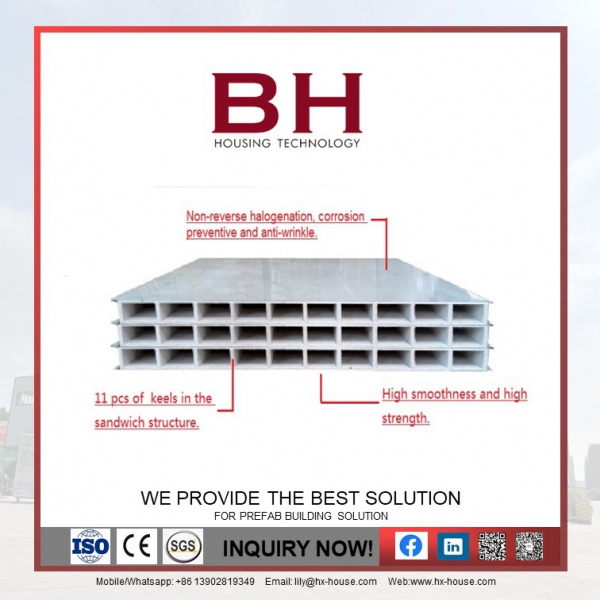
Fireproof MGO sandwich panel cleanroom wall panel
Read More
HOT PRODUCTS
PRODUCT CATEGORIES
HOT PRODUCTS
Steel structure building construction projects
Click:
Time:2024-12-26 13:16:43
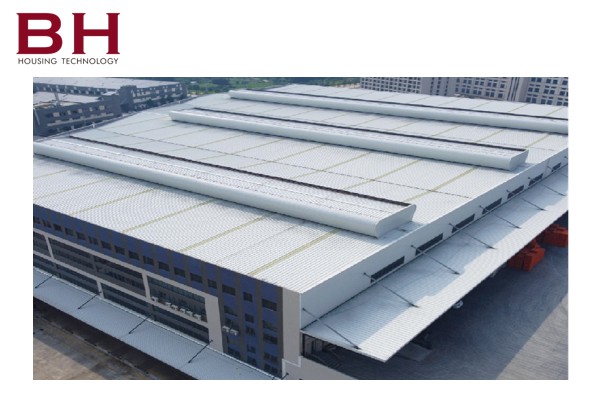
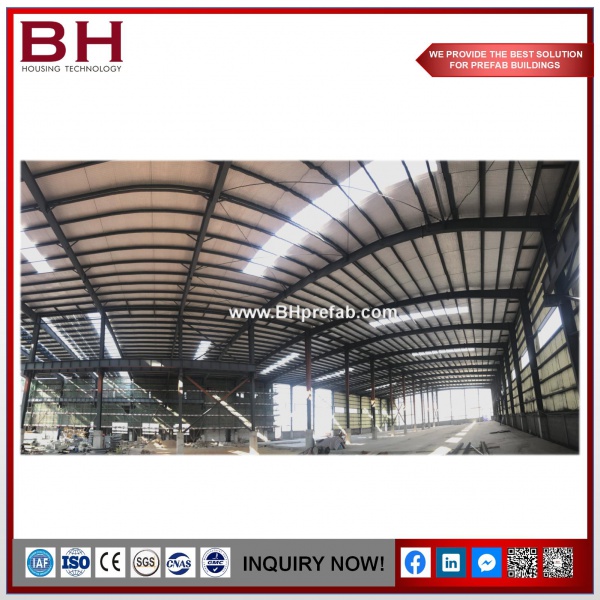
Steel structure building is a form of building that mainly uses steel as structural load-bearing components. This architectural form occupies an important position in modern construction projects, and its wide application benefits from its unique characteristics and significant advantages.
First of all, steel structure buildings have extremely high strength and can withstand large loads. As a high-strength material, steel has excellent tensile, compressive and shear properties, which enables steel structures to remain stable in various complex environments. For example, in high-rise buildings, steel structures can effectively resist the influence of external forces such as wind and earthquakes, ensuring the safety of the building. In addition, due to the high strength of steel, designers can optimize the structural layout and reduce unnecessary support components while ensuring safety, thereby improving space utilization.
Secondly, the construction speed of steel structure buildings is very fast. In contrast to traditional concrete buildings, steel structural members are typically prefabricated in factories and then transported to the construction site for assembly. This approach not only improves construction efficiency, but also reduces on-site wet work time and pollution. The quality control of prefabricated components is stricter, the dimensional accuracy is higher, and the installation is more convenient. Therefore, the construction period of steel structure buildings can be greatly shortened, especially for projects with tight construction schedules. This advantage is particularly obvious.
Furthermore, steel structure buildings are lighter in weight, which helps reduce the cost of foundation engineering. Due to the high density and extremely high strength of steel, the cross-sectional size of the steel structure can be made smaller and the overall weight is relatively lighter under the same load-bearing capacity. This means that the foundation does not need to bear excessive pressure, thereby reducing the size and cost of the foundation project. Especially in areas with poor geological conditions or high requirements for foundation bearing capacity, the advantages of steel structure buildings are more prominent.
In addition, steel structure buildings have good earthquake resistance. Steel has good ductility and toughness and can absorb and dissipate energy through deformation when an earthquake occurs, preventing the structure from suddenly breaking or collapsing. Many modern seismic design codes recommend the use of steel structure systems, especially in earthquake-prone areas, where the safety of steel structure buildings has been widely recognized.
Finally, steel structures are a green and environmentally friendly choice. Steel is a recyclable material. The discarded steel structure can be re-entered into the production process through simple processing to achieve resource recycling. In addition, steel structures produce less waste during demolition and have less impact on the environment. As society attaches great importance to sustainable development, more and more projects tend to choose steel structure buildings to comply with environmental protection requirements.
Steel structure buildings are widely used in various construction projects because of their unique advantages. Industrial plants often use steel structures because their large spans and high spaces are very suitable for the layout of large-scale production equipment; large-scale sports venues also often use steel structures to meet the long-span needs of auditoriums and rapid construction requirements; in high-rise buildings , the steel structure can not only provide sufficient strength and stability, but also effectively reduce the overall weight of the building; bridge engineering is inseparable from the steel structure, which provides strong support and spanning capabilities for the bridge.


GET IN TOUCH

Marketing headquarters: ROOM 1406 , TOWER 1 B, BUILDING 6 ,TIANAN DIGITAL AREA,JIAN PING ROAD,GUICHENG,FOSHAN,GUANGDONG ,CHINA
Workshop A: Shishan industry park, Foshan city, Guangdong province, P.R.China.
Workshop B: Mingu road, Gaoing town, Foshan city, Guandong province, P.R.China.


CONTACT US
You can contact us any way that is convenient for you. We are available 24/7 via Whatsapp, Messenger, email or telephone.


© 2022 Foshan B.H housing technology Company All rights reserved